
Hire an Expert to Develop a DNP Capstone Project Topic

Nursing scholars conducting a Doctor of Nursing Practice (DNP) are required to integrate their clinical experiences and doctoral-level knowledge and come up with a DNP project idea that demonstrates their expertise and contributes to existing knowledge. An exceptional DNP project idea should be evidence-based, focused on enhancing healthcare outcomes, and aligned with the American Association of Colleges of Nursing (AACN) essentials. For those for help to develop a DNP capstone topic, our company has verified nursing professionals who offer personalized DNP project development services for scholars in different DNP programs, from topic development to writing the DNP proposal to the final manuscript. We apply our skills and expertise to formulate relevant DNP ideas that align with the client’s area of interest and are focused on improving healthcare outcomes. In this article, we have highlighted 100 DNP ideas that can be applied to guide scholars in selecting effective clinical areas of inquiry for their DNP capstone project.
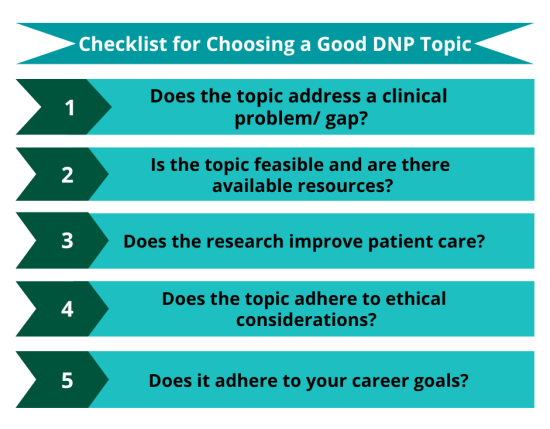
100 DNP Project Ideas From Our Experts
- Assessing the proficiency of verified registered nurse anesthetists in chronic pain management.
- Evaluating the use of technology in improving telehealth consultation for improved quality of care.
- Prevention of hyperbilirubinemia in newborns through enhancing their safety and quality of care.
- An evaluation of the importance of adopting evidence-based policies in the Neonatal Intensive Care Unit (NICU).
- Evaluating the differences between the nursing home policies and the World Health Organization’s recommendations for treating chronic pain.
- An evaluation of the effectiveness of adopting the use of Hemorrhagic code protocol (code H) in healthcare units.
- Evaluating the impact of using self-care models on elderly women patients with chronic illnesses in a primary care setting.
- Improving patient safety through applying clinical decision support systems to reduce mistakes in medication and measuring outcomes.
- Assessing the impact of implementing community outreach programs on patient visits.
- Designing and making use of databases such as PubMED and CINAHL to acquire information for healthcare decision-making, planning, and evaluation.
- Implementation of a palliative and hospice care education program for elderly male patients with dementia in long-term care facilities.
- Assessing the effectiveness of routine follow-ups for patients with Attention Deficit Hyperactivity Disorder (ADHD) in primary care.
- Clinical Management of valvular heart disease with subtherapeutic INR: A Quality improvement project.
- Implementing and assessing the use of technology to improve quality care in healthcare.
- Evaluating current management approaches for mentally ill patients to develop an evidence-based treatment program.
- Assess the effectiveness of peer support groups to improve mental health care for psychiatric patients.
- Comparing and contrasting the rate of patient satisfaction when using home care and physician care.
- Implementation of a delirium screening tool for older adults with cognitive impairment in a pediatric cardiothoracic ICU.
- Formulating a useful competency plan to enhance nurse responses during pediatric trauma resuscitation.
- Improving colon cancer screening participation using mailed Fecal Immunochemical Test (FIT) kits and follow-up calls in a community health program.
- Preventing pressure injuries among critical care patients in the ICU by applying a bundled skincare algorithm.
- Study high-risk patients, such as the elderly and young children, and come up with approaches to reduce the risks of practice change.
- Evaluate children at risk, such as the homeless or drug abusers, and recommend and implement policy change programs.
- Implement a learning institution-based diabetes care initiative to promote diabetes self-care practices for students.
- Develop and evaluate the effectiveness of the use of self-care models for patients with chronic illnesses such as cancer, diabetes, or cardiovascular diseases.
- Exploring maternal health for new mothers through enhanced antenatal care utilization.
- Care of the sepsis patient in the Intensive Care Unit (ICU): A quality improvement project.
- Exploring the effectiveness of implementing online triage in emergency departments to reduce waiting time.
- Improving Human Papillomavirus vaccine (HPV) vaccination rates among adolescent girls through school-health department collaboration in rural high schools.
- Evaluating the effectiveness of early mobilization of severely affected patients in the ICU.
- Implementing nutritional follow-up for post-bariatric surgery patients in healthcare.
- Enhancing oral medication adherence for oncology patients aged over 50 years at a rural cancer center.
- Introducing a sepsis simulation education program to improve nurse satisfaction and patient outcomes in an ICU setting.
- Evaluating stress mitigation measures for undergraduate and postgraduate nursing students.
- Exploring the effectiveness of the Pediatric Intensive Care Unit (PICU) diary in reducing stress levels of family members for patients in the ICU.
- Improving outpatient follow-up adherence in pediatric burn patients after discharge from the emergency department.
- Applying a technology-based solution to improve autism screening rates for children below five years of age.
- Implementing a depression assessment and intervention for breast cancer female patients.
- Evaluating the practicality of providing online access to lab results for cancer patients.
- Introducing the education for the use of the nasogastric feeding tube for caregivers in the neonatal ICU.
- Exploring the relationship between blood pressure and weight loss.
- Analyzing the effect of lifestyle and diet on a patient undergoing wound healing.
- Assessing the effectiveness of adopting a Chronic Obstructive Pulmonary Disease screening tool (COPD) for patients in primary care.
- Implementing a prenatal education program to expand knowledge about preterm labor risks among pregnant women.
- Applying a preeclampsia assessment tool to improve the self-efficacy of postpartum nurses in managing preeclampsia.
- Improving medication adherence in cataract patients through enhanced nurse-led discharge education.
- Exploring the anxiety levels of children and adolescents growing up in rural areas.
- Implementing the use of intensive behavioral therapy for obese adults aged between 30-45.
- Developing a healthcare education program to mitigate diabetic foot complications among African American individuals living with type 2 diabetes.
- Evaluating the application of breast cancer screening programs for women aged 40 years and older living in Minnesota.
- Creating an effective strategy to alleviate stress levels among bone marrow and blood stem cell transplant adult patients after transplantation.
- Implementing a home-based healthy lifestyle program to reduce obesity in children aged 12-16 years.
- Developing and implementing effective policies for managing postoperative patients with glucose dysregulation in an outpatient setting.
- Boosting the rates of HPV vaccination intake and completion among children aged 10-12 years in New York, Washington, and Idaho.
- Implementing eating disorder group psychotherapy sessions for teenagers aged 13-18 years with eating disorders.
- Creating an evidence-based policy enabling the patient transfer from the ICU to general wards to mitigate the occurrence of hospital-acquired pressure ulcers (HAPUs).
- Evaluating the efficacy of medication-assisted treatment in the treatment of opioid use disorder in young adults aged 18-20 years in a primary care setting.
- Assessing the positive and negative influences of nutritional choices in children aged 13-17 years.
- Increasing early autism screening rates in a pediatric clinic through the implementation of the M-CHAT-R Tool.
- Developing an effective strategic plan for a patient-centered medical home adaptation.
- Enhancing the pediatric immunization experience through implementing an effective training program for healthcare practitioners in a pediatric hospital.
- Enhancing pediatric needle experiences: A quality improvement project utilizing multimodal pain management strategies.
- Implementing a standardized hospital dismissal procedure for enhancing patient understanding of discharge instructions.
- Enhancing end-of-life care by developing an effective hospice training and toolkit for nurses in an elderly hospital in Seattle.
- Reducing compassion fatigue and enhancing ICU medical practitioners’ resiliency by applying mindfulness strategies.
- Application of the BaleDoneen method to optimize cardiovascular care for high-risk patients in a primary care clinic setting.
- Enhancing and standardizing concussion assessment and management protocols for students in Mullenix Ridge Elementary School.
- Developing an online caregivers’ program for patients living with recurrent pancreatic cancer.
- Creating an in-patient alcohol detoxification medication process for middle-aged adults with an age range of 40-65 years living in Minnesota.
- Implementing transformational leadership strategies to improve nurse satisfaction and retention in acute care hospitals.
- Developing a strategic healthcare improvement plan for Hispanic males in Texas by applying Internet-based social networks.
- Placing a Geriatric medical practitioner in accident and emergency departments to enhance patient outcomes for Geriatric patients.
- Training healthcare practitioners on simulation to decrease central line-associated bloodstream infections among patients in a primary care clinic.
- Addressing barriers to deprescribing chronic proton pump inhibitors prescribed as a first-line intervention for gastroesophageal reflux disease.
- Improving pediatric care through the implementation of a trauma-informed care education initiative for healthcare staff at a Children’s hospital in Minnesota.
- Developing effective strategies to enhance the care of domestic violence victims in the obstetrics departments.
- Implementing mindfulness-based stress reduction interventions to help hospital faculty members and staff manage stress levels.
- Enhancing cardiac care outcomes by shortening door-to-ECG time in the ICU: A quality improvement approach
- Developing a Catheter-Associated Urinary Tract Infection (CAUTI) reduction educational program for nurses with the aim of standardizing practice with external collection devices.
- Applying a healthcare provider-led tobacco cessation program to reduce tobacco use by cancer patients.
- Executing global mental health screening programs at residential schools for deaf and hard-of-hearing children aged 13-17 years.
- Assessing the significance of the Arc of King County parent matching program for French-speaking parents and guardians of individuals with intellectual disabilities.
- Enhancing cultural responsiveness among behavioral healthcare providers in a community mental health clinic.
- Evaluating the benefits of applying the sepsis bundle to improve patient outcomes for patients with sepsis at an urban teaching medical institution.
- Identifying the techniques for applying effective hyperphosphatemia treatment in adults receiving home peritoneal dialysis.
- Assessing and implementing a joint decision-making tool for addressing the use of cannabis in the management of chronic non-cancer pain and addiction.
- Applying an effective mindfulness program to lessen compassion fatigue and burnout among healthcare practitioners.
- Development and implementation of a handoff tool for ensuring patient care responsibility in an emergency psychiatric unit.
- Addressing the mental health crisis in children and young adults within a residential setting who suffer from visual impairments.
- Enhancing the use of nurse-driven palliative care screening tools to enhance patient care in an interprofessional setting through the use of a multidisciplinary feedback approach.
- Satisfying the healthcare needs of sexual and gender minority youth through the implementation of an affirmative approach in an acute care setting.
- Developing and implementing an educational program for physicians and nurse practitioners to enhance the care of patients with alcohol withdrawal syndrome.
- Offering internet-based anxiety psychoeducational tools and programs to rural schools for advancing the mental health awareness of children and adolescents in rural areas.
- Enabling patient and medical staff safety through the application of a violence assessment tool in critical care settings.
- Introducing contingency management in outpatient facilities to enhance retention in medication-assisted treatment for adults aged 30-35 years with Opioid use disorder.
- Creating and applying a program to enhance nurses’ confidence regarding advanced care planning conversations within a large healthcare institution.
- Developing an effective diabetes care policy for students in the Central Valley School District.
- Evaluating the coping methods of nursing students during COVID-19.
- Implementation of a healthcare provider and staff-focused educational program in a primary care center.
- Introducing and applying postpartum depression screening for women in the intensive care nursery.
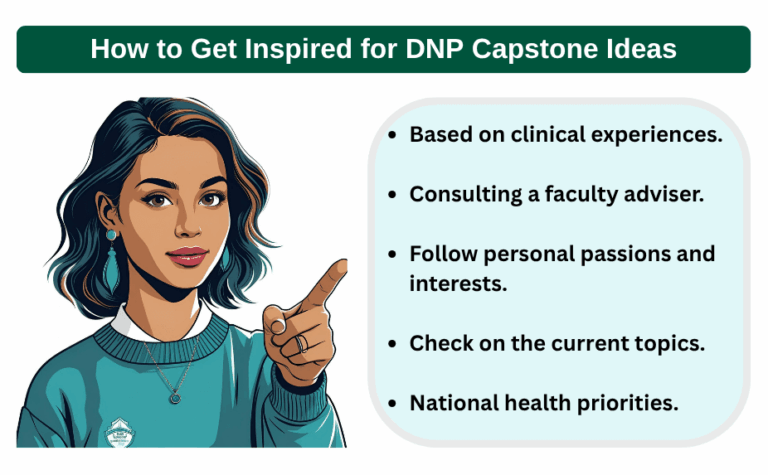
Why Get Professional DNP Capstone Topic Help Online from Our Experts?
Our company has the best subject matter experts in nursing who offer specialized help with developing DNP project topics and composing an exceptional DNP capstone paper that meets advanced nursing practice standards.
Professionals from our company provide customized DNP capstone project writing services to clients from all DNP programs. Whether clients need assistance with developing a DNP capstone topic, conducting a literature review, data analysis, poster making, or editing and proofreading, we have dedicated experts who offer personalized assistance for clients’ DNP projects.
Our dedicated team of consultants is available around the clock to guarantee clients prompt responses to make changes to the topic as per the instructor’s feedback, gain clarifications regarding their DNP project, and handle last-minute submissions without delays, or respond to any inquiry from the client.
Even for DNP students running on tight deadlines, hiring our expert DNP capstone project writers assures clients a quick turnaround time without compromising on quality.
Summary
The DNP capstone project provides advanced practice nursing scholars with the opportunity to systematically transform the current best evidence into practice. Developing an outstanding DNP capstone project idea requires knowledge of advanced healthcare policies and expertise in the area of interest. This is why most DNP students tend to look for a DNP capstone topic development expert to offer specialized assistance in developing feasible topics, ready for approval by the supervisors. Worry less about your DNP project topic by enlisting our professional capstone writing services. Contact us now to get started. You can also join our live chat to talk to our professional customer support team, available 24/7 for prompt responses.