
100 PICOT Ideas for Nursing Projects

The evidence-based practice competencies of developing a Population, Intervention, Comparison, Outcome, and Time (PICOT) question and cultivating a spirit of inquiry are significant for conducting a successful Doctor of Nursing Practice (DNP) project. Utilizing the PICOT framework allows nursing professionals to ask the necessary questions and get clinical answers that can be used to enhance healthcare outcomes and meet the requirements for evidence-based quality improvement. Ready to strengthen your nursing project with a well-formulated PICOT question? Our nursing PICOT clinical question writing services are designed to help scholars with formulating, rewriting, and changing PICOT questions to ensure that the inquiries are based on current and peer-reviewed literature. Our writers have over 10 years of expereince helping our clients write DNP capstone projects successfully, starting from topic and PICOT development to writing the final manuscript. This article has highlighted 100 PICOT ideas and 10 well-formulated PICOT examples to guide nursing scholars and researchers in developing clinical questions.

100 PICOT Ideas
(a). Quality of Life PICOT Ideas
Quality of life PICOT ideas address a patient’s subjective perception of the condition of their life.
- Is Tai Chi exercise effective for preventing falls and improving balance stability in elderly adults with fall risk aged 60-80 years compared to physical alternative exercises?
- What is the effectiveness of therapy and medication compared to social support in reducing postpartum depression for newly delivered mothers?
- Comparing the effect rate of art and mind-body therapy in ensuring the emotional well-being of patients undergoing long-term cancer treatment.
- Among adult women cancer survivors, does enrolling and participating in a support group, compared to no participation, enhance the emotional well-being and quality of life?
- Comparing the effectiveness of combined postnatal education and follow-up care and standard postnatal care for first-time pregnant mothers in reporting negative postpartum symptoms to healthcare providers immediately after delivery.
- How do transitional care programs compare with applying respite care in reducing readmission rates for hospitalized elderly patients?
- Comparing the use of telehealth monitoring and eye-to-eye consultation visits in the management of blood sugar levels among adult patients living with type 2 diabetes.
- Is applying a standard sedation procedure more effective than applying non-standardized sedation practices in preventing pain and anxiety for critically ill adult patients in the Intensive Care Unit (ICU)?
- How does a multidisciplinary approach compare to care by a general medical practitioner in improving patient satisfaction and effectively regulating blood sugar levels among adult patients with type II diabetes?
- Determining the length of stay and patient outcomes for adult patients diagnosed with pneumonia when applying clinical pathways for treatment compared to usual patient care.
- Application of advanced wound care in speeding up the healing process and reducing infections among patients with pressure injuries compared to traditional therapy methods.
- Comparing the effective symptom management of patients living with chronic obstructive pulmonary disease when applying nurse-led care procedures or standard care.
(b). Prognosis/ Prediction PICOT Ideas
Prognosis or prediction PICOT ideas highlight the likelihood of the development or progression of a disease based on factors such as the patient’s status and symptoms.- Does a rise in gestational body mass index (BMI) compared to normal BMI predict the risk of contracting gestational diabetes mellitus in pregnant women?
- Does a routine frailty assessment assist in the prediction of postoperative complications in elderly adults aged 60-80 years compared to utilizing no frailty assessment test?
- Determining whether a pre-existing smoking history predicts the risk of developing acute myeloid leukemia (AML) compared to a non-existent smoking history for adult males over 35 years.
- In incident patients with end-stage renal disease, does the use of serum creatinine levels when dialysis commences, compared to lower serum creatinine levels as dialysis progresses, predict mortality?
- In the ICU, does the presence or absence of oral care practices predict the risk of ventilator-associated pneumonia for mechanically ventilated patients?
- For older adults aged 60-75 years, can vitamin D deficiency predict the development of muscle weakness and impaired gait patterns compared to normal levels of vitamin D?
- What are the biological and psychological predictors of postpartum depression for newly delivered mothers with a history of depression compared to those without?
- Evaluating whether a high body mass index compared to a low body mass index is more likely to cause readmissions for children with asthma.
- Among operative room nurses, do artificial nails compared to natural nails predict a high microbe availability on the nail beds after a pre-surgery scrub?
- Do elevated HbA1c levels have a stronger predictive value for diabetes complications compared to normal HbA1c levels for patients with type 2 diabetes?
- Current and former adult male smokers have a higher risk of a long-term outcome of chronic obstructive pulmonary disease compared to men with no smoking history.
- Determining how early mobilization predicts a shortened length of stay in the hospital compared to later mobilization for hip fracture postoperative surgery.
- For post-operative cardiac patients, high levels of troponin are more likely to cause myocardial injury compared to low levels of troponin.
- Evaluating how baseline Hb1Ac levels can predict the development of nerve damage compared to controlled Hb1Ac levels for elderly males with type 1 and type 2 diabetes.
(c). Intervention PICOT Ideas
Intervention PICOT ideas illustrate the actions that nurses perform to implement a patient’s care plan and help them achieve the desired outcomes.- Evaluating the effectiveness of hormonal birth control compared to barrier methods in preventing pregnancy for women above 30 years.
- Does spironolactone work more effectively than clonidine in reducing blood pressure for adults over a 2-month treatment period?
- Comparing the efficiency of administering sublingual sugar and sugar alcohol in raising blood sugar levels for children with hypoglycemia.
- Assessing whether the utilization of continuous feeding is more effective than stopping feeding in improving tolerance for emesis patients.
- Determining the effects of utilizing beta-blockers compared to thiazide diuretics in managing high blood pressure for adult women over the age of 65 years.
- Comparing the more effective measure for managing symptoms and enhancing the quality of life between applying a psychological intervention and placebo treatment.
- Evaluating the effectiveness of utilizing alarm sensors compared to standard proactive care protocols as a method of reducing accidents in hospitals among elderly patients aged 60 years and above.
- The difference between integrating telemonitoring and a medication reminder system and utilizing telemonitoring only on the hospital readmission reduction rates for patients diagnosed with chronic heart failure.
- How does standard care compare with self-management education programs in improving asthma control for patients with asthma?
- Alleviating the bed head to a semi-recumbent position for mechanically ventilated patients in the ICU to eliminate the risk of ventilator-associated pneumonia compared to keeping them flat.
- Does watchful waiting with pain management compare with immediate antibiotic treatment for children aged 7-12 years with acute otitis media?
- Comparing the effectiveness of applying both physical therapy and medication management compared to physical therapy alone in relieving pain for post-operative orthopedic patients.
- Is applying post-discharge care and managing complications more useful at reducing readmission rates for adult patients with chronic liver disease?
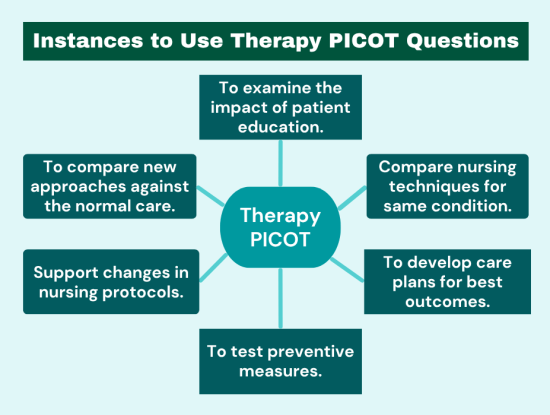
(d). Therapy PICOT Ideas
Therapy PICOT ideas are related to how nurses select the best actions to help patients manage their disease.- Evaluating whether music therapy is a more effective method of post-anesthesia care unit pain management for patients after surgery compared to cognitive-behavioral therapy.
- Comparing the survival rates of patients living with chronic obstructive pulmonary disease under long-term oxygen therapy or short-term oxygen therapy.
- Does applying breast massage enhance the flow of milk compared to a lack of breast massage for postnatal women with lactation problems?
- Is cognitive behavioral therapy more effective for mitigating symptom severity compared to medication for schizophrenic patients?
- Does transcranial current stimulation contribute to better pain relief than sham stimulation for chronic pain patients?
- Assessing whether medication is more effective at enhancing behavior than neurofeedback training for patients living with hyperactivity disorder.
- Is exercising better than taking antidepressant medication for mitigating depressive episodes in individuals with depressive disorder?
- Comparing the usefulness of angiotensin-converting enzyme inhibitors and angiotensin receptor blockers in reducing the progression pace of the renal disease for patients living with chronic kidney illness.
- Do mindfulness-based strategies aid in the treatment of hyperactivity disorder for pediatric patients compared to medication alone?
- Evaluating the reliability of cognitive behavioral therapy compared to physical therapy in reducing pain for chronic pain patients.
- Treatment add-ons are better at alleviating depressive episodes compared to placebo medication for patients with depression.
- Applying psychoeducation compared to standard treatment is a more effective method to enhance medication adherence for patients with schizophrenia.
(e). Diagnostic PICOT Ideas
Diagnostic PICOT ideas demonstrate the action of identifying and describing a patient’s disease, injury, or disorder through evaluation.- Comparing the accuracy of altitude-adjusted oxygen saturation cutoffs and standard sea level cutoffs in identifying hypoxemia among school-going children.
- Evaluating whether AI systems have a better diagnostic performance rate for detecting diabetic retinopathy compared to traditional screening methods for patients with type 2 diabetes.
- Comparing the effectiveness of applying lung ultrasound or chest x-rays to detect pneumonia in the early stages among children below 15 years.
- Procalcitonin testing is superior in terms of accuracy in identifying bacterial infections compared to a procalcitonin test for adult patients who have sepsis.
- Comparing the efficacy of rapid antigen testing and PCR tests for diagnosing patients with COVID-19 symptoms.
- Evaluating whether the focused assessment with sonography for trauma scan, compared to no ultrasound, allows faster and more accurate diagnosis of life-threatening injuries in trauma patients.
- Assessing the effectiveness of thermography in allowing the early detection and intervention of diabetic foot ulcers compared to standard clinical examinations among adult diabetic patients aged 30-50 years.
- Between the Patient Health Questionnaire-9 and the Beck depression inventory, which is more accurate at diagnosing depressive disorder among adolescents aged 10-19 years?
- Differentiating the diagnostic accuracy of endotracheal aspirate and bronchoalveolar lavage in detecting bacterial pneumonia among adult patients.
- Determining the effectiveness of using the D-dimer compared to imaging techniques as a screening method for venous thromboembolism in postoperative patients in an ICU setting.
- Comparing the usefulness of applying flexible or virtual colonoscopy or stool tests to detect colon cancer in women over the age of 50 years.
- Assessing the effectiveness of yearly breast cancer screening compared to every 3 years in reducing breast cancer mortality for elderly women above 50 years of age.
(f). Prevention Nursing PICOT Ideas
Prevention PICOT ideas highlight how to reduce the chances of a disease before it occurs by identifying and preventing diseases and injuries through screening.- Assessing whether kangaroo care of a newborn infant is a more assured way of preventing neonatal mortality and hypothermia after childbirth compared to swaddling.
- Comparing the effectiveness of hand washing and utilizing gloves and masks in reducing hospital-acquired infections among medical practitioners in a clinical setting.
- Determining the effectiveness of a personalized mouth care program in preventing incidences of pneumonia compared to standard care among elderly hospitalized patients.
- Evaluating the effectiveness of school-based health centers compared to a community-wide dialogue approach in reducing the rate of unexpected pregnancies for adolescent teens.
- The usefulness of daily vitamin D and calcium supplementation compared to no supplementation in supporting bone health for women with osteoporosis.
- Comparing the usefulness of dynamic air flow pressure-relieving mattresses and normal mattresses in reducing the recurrence of pressure ulcers for patients with injuries.
- Breastfeeding alone, compared to integrating breastfeeding and weaning, reduces the probability of contracting atopic dermatitis for newly born children in the stages of early childhood.
- Comparing the effectiveness of preoperative nutrition support and no nutrition support in reducing the incidence of treatment-related complications for adult patients undergoing surgery.
- Assessing the effectiveness of introducing a cognitive behavioral skills training program compared to no intervention for preventing alcohol abuse among higher education students in one academic year.
- Is a Mediterranean diet, compared to a dietary approach to stop hypertension (DIET), more effective for preventing progression to type 1 diabetes for adults aged 20-35 years with prediabetes?
- Evaluating whether group or individual prenatal care is more effective at reducing the risk of gestational diabetes for newly delivered mothers.
- Determining the role of good dieting and physical exercise in reducing cardiovascular risk factors among elderly adults aged 60 years and above, compared to poor dieting and no physical exercise.
- Effects of the implementation of a school-based physical activity intervention in decreasing BMI levels among school-going children compared to zero physical activity.
- Assessing the reduction in contraction rate of diphtheria among patients above 50 years who have taken the diphtheria vaccine compared to those who have not received the vaccine.
(g). Etiology Nursing PICOT Ideas
Etiology PICOT ideas focus on the negative impact of acquired from a treatment, intervention, or exposure.- Are males over the age of 30 years who have smoked for more than 1 year exposed to a greater risk of esophageal cancer when compared to the same age group of men who have no history of smoking?
- What is the likelihood of negative health outcomes for adults over 22-year-old adults with hyperkalemia compared to normal potassium amounts?
- Sleep deprivation significantly increases the risk of mental health disorders for adults aged 20-35 years compared to having a normal sleeping schedule.
- Acute hypoglycemia is more likely to cause cognitive impairment than normal glucose levels for patients with type 2 diabetes.
- Long-term alcohol consumption compared to no use contributes to cardiovascular issues such as cardiomyopathy in adult males aged 25-45 years.
- Prior episodes of perinatal depression, compared to no history, increase the likelihood of postpartum depression and psychosis for newly delivered mothers.
- Prolonged screen time of over 12 hours for teenagers aged 13-18 years can lead to the development of metabolic syndrome compared to limited screentime of less than 6 hours.
- Long-term recurrent use of corticosteroids by elderly male patients with osteoporosis increases the risk of hip fracturing compared to no use.
- Frequent vaping compared to no e-smoking increases the risk of lipoid pneumonia for adolescents aged 16-20 years.
- Giving birth by caesarean section interferes with the transmission of the maternal microbiome, therefore increasing the development of allergic diseases compared to vaginal delivery for newly born infants.
- Evaluating whether taking an overnight shift compared to a day shift is an independent risk factor for getting adverse cardiovascular outcomes for nurses working in shifts.
- Assessing whether a high BMI is more likely to cause gestational diabetes compared to a normal BMI for overweight expectant mothers.
- Does exposure to secondhand smoke increase the probability of developing asthma in underage children less than 15 years old compared to no exposure?
- In female patients over 40 years with leukemia, does chemotherapy-induced neutropenia increase the risk of infection compared to a low neutrophil count?
- Among adult diabetic women, poor glycemic control in diabetes increases the risk of incident chronic kidney disease compared to adequate glycemic control.
- Long-term oxygen therapy contributes to the development of retinopathy of prematurity compared to optimal oxygen therapy for premature babies.
- Obese children aged 7-14 years have a higher risk of contracting type 2 diabetes compared to children who are of average weight.
- Comparing the usefulness of antidepressant medicines and applying psychotherapy as methods of reducing postpartum depression among postnatal mothers.
- Utilizing birth control pills increases the risk of developing blood clots compared to intrauterine devices for women aged 35 years and above.
- Trauma exposure increases the risk of anxiety-related illnesses compared to the absence of childhood trauma for children aged 10-18 years.
- Adult males aged 25-40 years who smoke and drink alcohol have a greater probability of contracting adenocarcinomas of the esophagus compared to men who don’t have a smoking or drinking history.
- Among adult males aged 40 and above, does having a family history of prostate cancer increase the risk of developing prostate cancer compared to those with no family cancer history?
- For adults with chronic back pain, can limited physical activity increase the severity of symptoms compared to regular exercise and physical movements?

10 PICOT Examples
- In male patients over 50 years undergoing total hip arthroplasty (P), how effective is patient-controlled analgesia (PCA) medication (I) compared to PRN intramuscular analgesia (C) in reducing postoperative pain (O) 48 hours after surgery (T)?
- For patients with hip replacement (P), does developing a post-operative infection (I), compared to not developing an infection (C), affect the recovery duration (O) within two months after delivery? (T)
- For children under 13 years (P), does early BMI screening combined with parental obesity history (I), compared to BMI screening alone (C), improve the prediction accuracy of childhood obesity risk (O) by age 15 (T)?
- In newborns (P), how does tandem mass spectrometry (I) compare to the traditional PKU screening test (C) in accurately detecting elevated phenylalanine levels (O) within the first 24 hours after birth (T)?
- In perioperative nurses performing surgical scrubbing (P), how does having natural nails (I) compared to artificial nails (C) affect bacterial colonization (O) within 72 hours of the surgical period (T)?
- For 30-45-year-old African American men living in Washington (P), does telemonitoring blood pressure (I), compared to not telemonitoring (C), enable better blood pressure management (O), within the first four months of treatment (T)?
- In pregnant women diagnosed with gestational diabetes (P), does a new diagnosis during pregnancy (I), compared to a diagnosis from a previous pregnancy (C), result in higher adherence to daily blood glucose self-monitoring and reporting (O) 8 weeks postpartum (T)?
- In older adults aged 70-80 years with risk of falls (P), do slow-motion workouts (I) compared to no exercise (C) enhance muscle strength, coordination, and balance (O) within 6 months (T)?
- For young women aged 25-30 with chronic obstructive pulmonary disease (P), does a self-management support program (I), compared to medical care (C), contribute to better quality of life (O) after four months of application (T)?
- In adolescents aged 13–18 diagnosed with anxiety disorders, does psychodynamic therapy (I) compared to exposure therapy (C) reduce the frequency of anxiety attacks (O) within six months (T).
Summary
Formulating a well-structured PICOT question allows advanced practice nurses to get reliable evidence-based answers that can be used to guide clinical research, enhance health care, and support quality improvement initiatives. Our professional writers understand the challenges most nursing scholars face when developing the PICOT, which is why we provide expert PICOT question writing help to enable them to conduct accurate searches. Order our PICOT writing services today and receive professional DNP writers, excellent customer support, and a fast turnaround time. You can also join our live chat to talk to our friendly customer support team for any inquiries and to guide you through our order process. We are available 24/7 to serve you anytime you need our services and to ensure the timely delivery of tasks.