
Tips for Writing an Evidence-Based DNP Project

The evidence-based practice DNP project is a scholarly study that provides evidence of a nursing scholar’s critical thinking skills and ability to apply research protocols in identifying clinical problems, evaluating the relevant data and implementing effective solutions. Writing an evidence-based DNP project requires competence in activities such as the translation of knowledge into practice and developing initiatives that enhance the reliability of health care practices and outcomes. Are you an advanced nursing practice scholar looking for expert, evidence-based DNP writing services? Now you have an opportunity to obtain a high-quality, evidence-based DNP project paper, original human-written content, and a fast turnaround time, all from our company.
We have a team of highly skilled and experienced DNP writers who specialize in evidence-based practice nursing and help clients with all aspects of their evidence-based practice projects, from PICOT development to final write-up. In this article, we have discussed some useful tips for DNP students working on their evidence-based DNP project, including applying an evidence-based model, identifying a gap in practice, and incorporating sustainability plans. We have also highlighted the step-by-step process of how to write evidence-based DNP projects.
What is an Evidence-Based DNP Project?
An evidence-based DNP project is a scholarly initiative that involves applying the best research evidence by integrating clinical experience and patient preferences and needs to improve health care outcomes. Evidence in the context of DNP projects refers to data acquired from credible scientific studies such as randomized clinical trials, meta-analyses, analytic, or quality improvement studies. By conducting an evidence-based DNP project, scholars contribute to the nursing discipline by reducing medical costs, improving quality and population health outcomes, and reducing variations in practice.
Tips for Writing an Excellent Evidence-Based DNP Project
1. Formulate a Clear PICOT Question
The acronym PICOT stands for Population, Intervention, Comparison, Outcome, and Time. A PICOT question is a structured search strategy that is used to guide the location of the best available evidence that can be used to answer a clinical question. Before developing a PICOT question, the DNP student should conduct a needs assessment to ensure that the clinical inquiry is relevant, evidence-informed, and aligns with patient needs. The PICOT question should be clear, feasible, original, and make a valuable contribution to advanced nursing practice. Developing a PICOT question helps the DNP student to locate the best evidence for better patient care by simplifying complex topics into keywords, thereby making it easier to identify high-quality research sources and guide evidence-based practice.
2. Identify a Gap in Practice
A gap in practice includes an opportunity for improvement for knowledge, skills, or practice. An evidence gap occurs in situations where there is insufficient research data to support a claim. A gap for evidence-based practice in advanced nursing practice may exist because of shifts in patient needs or priorities, outdated methodologies, or a lack of protocols based on current evidence. Some methods that DNP scholars can apply to identify gaps in health research include conducting surveys, case studies, reviews (systematic reviews, scoping, health technology assessment, or rapid), synthesis, evidence mapping, or assessments. Identifying gaps in practice for the evidence-based DNP project is crucial for developing practical interventions that improve healthcare outcomes, contributing to the existing body of knowledge, and enhancing patient care.
3. Utilize an Evidence-Based Practice Model
A common way of managing the complexities of evidence-based healthcare practice is by utilizing models and frameworks that provide strategies to determine patient needs and guide healthcare processes. When conducting the evidence-based DNP project, nursing students should select and apply well-established frameworks such as the Iowa EBP model, Johns Hopkins’ model, ACE Star model, and the Evidence Implementation Model to structure their DNP project. Scholars should choose and apply a model that aligns with the clinical problem and intended intervention. For example, the Iowa model is ideal for implementing evidence-based practice changes. By applying evidence-based models, DNP students can utilize the most current research to develop best patient care practices, ensure complete implementation of the project, and optimize the use of healthcare resources.
4. Develop Interventions that Show Interprofessional Collaboration
Interprofessional collaboration is the cooperation of different medical practitioners who blend their competencies and skills to make the best use of healthcare resources. For evidence-based DNP projects, nursing students can design an intervention that involves integrated input from various clinicians, such as pharmacists, nurses, and physicians. They should identify all relevant healthcare professionals whose role aligns with the clinical problem under research and involve them in planning and conducting the study. Developing interventions that demonstrate interprofessional collaboration within the evidence-based project enables DNP students to develop new models of care that can be used to improve patient outcomes, healthcare procedures, and reduce medical costs.
5. Include Plans for Sustainability of the Practice Change
Most DNP projects, including evidence-based studies, should include a sustainability plan that serves as a roadmap on how the study will achieve long-term goals and demonstrates strategies to continue the program. When writing the evidence-based DNP project, the student should include the sustainability plan in the conclusion section to illustrate the lasting impact and effectiveness of the study. Incorporating a well-crafted sustainability plan demonstrates the student’s commitment to developing sustainable nursing practices and ensuring effective resource management.
6. Apply Critically Appraised Evidence
Critical appraisal is the course of action that is conducted to systematically examine research and evaluate its reliability and relevance to direct professionals in implementation. For a DNP project, the scholar should apply high-quality studies that are most applicable to the identified research gap. By applying critically appraised evidence, the DNP student ensures that the evidence-based practice is grounded in high-quality evidence, has the potential to positively impact patient care outcomes, and aligns with ethical standards. To critically appraise evidence, one can prepare an evidence table.
7. Seek Feedback from DNP Project Mentor or Advisor
DNP project mentors and advisors work closely with nursing students to support and assist them with the development and revisions of the evidence-based DNP project. After selecting a topic, formulating a PICOT question, and conducting research for the DNP project, the scholar should schedule a meeting with the project mentor or advisor to discuss their advancement to ensure they are progressing as expected. By getting constructive feedback, the student is able to identify areas to make changes, thereby ensuring timely graduation with an exceptional evidence-based DNP project.
Steps for Writing an Evidence-Based DNP Project
Step 1: Develop a Clinical Question
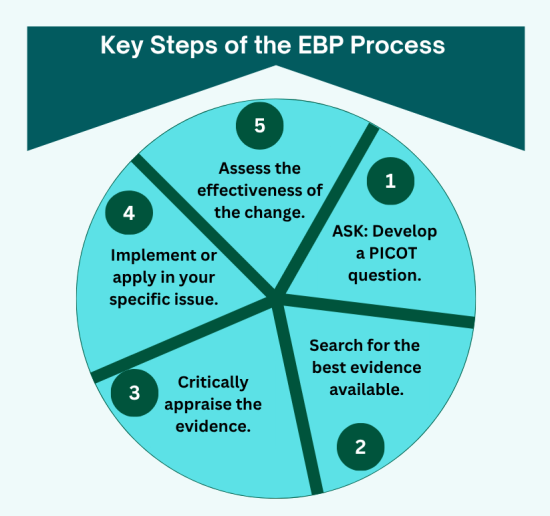
The first step in conducting an evidence-based project is developing a researchable question and breaking it down using the PICOT format. Formulating a PICOT question helps in identifying the key terms that will be used to search for and identify the best evidence to answer the clinical question. Developing a well-structured PICOT question enables the scholar to conduct effective research and make evidence-based recommendations to enhance patient care and healthcare outcomes.
Step 2: Search for Evidence
When searching for evidence, using the PICOT format helps in the identification of keywords that, when entered sequentially, enable the location of relevant peer-reviewed articles in vast research databases such as PsycINFO, PubMed, Medline, and CINAHL. To effectively search for information, identify the terms that will be found in the PICOT question, select the sources where research for the evidence-based DNP project will be conducted, and formulate a search strategy. Locating credible evidence for the DNP project is useful for ensuring that healthcare decisions are made based on the most recent and reliable information available, thereby contributing to improved quality of care.
Step 3: Appraise the Evidence
After selecting the sources, the DNP scholar appraises the studies to identify their levels of evidence and determine which are most relevant, reliable, and answer the clinical question. Carefully evaluate the identified sources and determine if they have sufficient information that is relevant to the area of inquiry. Assess the studies for credibility, transferability, dependability, confirmability, and if the research design and methods applied show validity and trustworthiness. Critically appraising the evidence is significant for evaluating the importance and clinical applicability of the research studies and identifying bias.
Step 4: Final Write-up of the Evidence-Based DNP Project
Different universities have distinct expectations and methods for writing the evidence-based DNP project. When writing the evidence-based DNP project, the scholar should follow the specific instructions provided by their faculty supervisors to meet program requirements and ensure the quality of their study. An evidence-based DNP project typically consists of:
- The title page
- Introduction with background information, problem statement, purpose of the project, the PICOT question being addressed, and a thesis statement.
- Literature review
- Methods used to select the best-evidence recommendations include information sources, keywords and concepts, inclusion and exclusion criteria, process for critical appraisal of sources, and techniques used to synthesize evidence.
- Data analysis and Results
- Discussion
- Conclusion including a summary, limitations of the DNP project, sustainability, and recommendations for future research.
- References
- Appendices
Summary
Evidence-based DNP projects contribute to a higher quality of healthcare, improved patient outcomes, reduced medical costs, and better patient and nurse satisfaction. Applying professional tips when developing the evidence-based DNP project enables scholars to think beyond theory and apply what works in a healthcare setting. To obtain evidence-based DNP project writing services offered by professional nursing writers, reach out to our consultants now for personalized help. Undoubtedly, you are an ambitious student who is prepared to cope with any challenge that comes along in your nursing practice. However, you may need help to write a DNP capstone project to avoid burnout and stress brought about by researching and writing a DNP project. Contact us or reach out to our friendly customer support team via our live chat for excellent help with an evidence-based DNP project.