
Tips for Writing a Quality Improvement DNP Project
Nursing scholars conduct quality improvement DNP projects to demonstrate their ability to identify clinical problems, develop solutions, implement interventions, evaluate outcomes, and contribute to a more efficient healthcare system. Through quality improvement projects, DNP students can enhance patient care, achieve efficiency in healthcare delivery, and reduce medical costs. Might you be a scholar who is interested in ordering quality improvement DNP project writing services? We are the leading DNP projects writing company globally. Our reputation stems from our commitment to ensuring that our clients get value for their money, feel free and at ease when ordering a quality improvement DNP project.
Our expert DNP writers compose quality improvement papers that are well-researched with credible sources, carefully evaluated, and designed to make a significant contribution to nursing practice. Order our quality improvement DNP writing services today and enjoy excellent customer support from dedicated consultants, free unlimited revisions, and timely delivery.
In this article, we have discussed some tips that DNP scholars can apply to make their quality improvement projects exceptional, such as applying an iterative method, utilizing an evidence-based approach, and having replication potential in other clinical settings. We have also highlighted how to structure the DNP quality improvement paper and ideas for quality improvement projects.
What is a DNP Quality Improvement Project?
A DNP quality improvement project is a study that is conducted to improve patient outcomes, health system performance, and professional development by applying a combined and multidisciplinary approach. The purpose of conducting a DNP quality improvement project is to enhance the way care is delivered in a clinical setting. To enable the feasibility of the quality improvement study, the DNP scholar should review gaps in nursing practice and identify areas that need advancement. The importance of conducting a DNP quality improvement project can be seen in areas such as:
- Improving the quality of care and achieving better patient outcomes.
- Increasing patient satisfaction through patient-centered care.
- Identifying and eliminating wasteful practices in healthcare, streamlining processes, and increasing efficiency.
- Provision of care that complies with regulations and standards.
- Better communication between medical practitioners and patients.
Excellent Tips for Writing a DNP Quality Improvement Project
In advanced nursing practice education, conducting the DNP quality improvement is an opportunity to use systematic change procedures and tools to improve patient experiences and healthcare outcomes. For the DNP quality improvement project to receive approval and make a significant contribution to nursing practice, it must adhere to specific academic and clinical care standards. When writing the DNP quality improvement project, it should:
1. Solve a Clinical Problem Utilizing an Evidence-Based Approach
An evidence-based approach is a systematic method of assessing the best available scientific evidence from peer-reviewed studies and clinical experiences to make healthcare-related decisions. Rather than relying on intuition, the DNP student should use practices and interventions that have been proven effective through credible scientific studies to improve patient outcomes. By utilizing the best available research evidence in clinical practice for the DNP quality improvement project, scholars get reliable findings that can be used to make informed choices, improve care processes, and ensure patient satisfaction.
2. Provide Outcomes Using Appropriate Data Analysis Techniques
In quality improvement DNP projects, reliable and sequential data collection and analysis techniques should be utilized to demonstrate the initial measurements of care quality and its changes over time. The DNP student should select appropriate quantitative or qualitative techniques that align with the project’s research design, data, and outcome measures. Using data strengthens the credibility of the findings of the quality improvement DNP project and supports evidence-based conclusions. Presenting the results of the analysis is important for influencing nursing practice and justifying recommendations for future research.
3. Have Replication Potential in a Similar Clinical Setting
Replication of a study is important because it allows for the validation of findings and enables scientific progress by promoting the identification of new evidence, enabling understanding, and challenging existing claims. The quality improvement DNP project should offer a structured framework that can be replicated or adapted in a new healthcare environment. To enable replication, the DNP scholar should document details about patient or staff group recruitment, procedures, and outcomes so that other investigators can learn from and employ the approach. By illustrating the quality improvement DNP project’s replication potential, the nursing student increases the credibility of the study and enables the research to be generalized for other applications in the healthcare setting and future research.
4. Demonstrate a Deep Understanding of the Systems and Procedures
To develop an effective quality improvement DNP project, the nursing student should show a deep understanding of the systems, care procedures, and workflows within a clinical setting. An in-depth understanding of the internal processes enables the DNP student to design effective healthcare interventions that are safe, efficient, and patient-centered. The section of the quality improvement process should contain a comprehensive analysis of the care pathways and processes that are to be improved. By showing knowledge and expertise, the DNP student formulates a well-designed quality improvement project that gets stakeholder support, improves patient outcomes, and ensures sustainability.
5. Use an Intervention with Multiple Elements
Quality improvement DNP projects often employ a multifaceted approach by integrating various strategies and tools to solve the clinical problem. The nursing scholar should apply an intervention with multiple elements by integrating various methods that work together to contribute to positive changes in healthcare practice. Examples of elements that can be applied in a quality improvement DNP project include patient education, policy modification, and electronic health record prompts, among others.
6. Ensure the Project Aligns with the AACN DNP Essentials
The doctoral-level skills gained through the use of the American Association of Colleges of Nursing (AACN) DNP Essentials have a positive impact on healthcare outcomes for patients and populations; therefore should be included in the quality improvement project paper. To align the quality improvement document with the DNP essentials, ensure the project addresses a specific problem in nursing practice, utilizes evidence-based practice, and contributes to better patient outcomes. Utilizing the DNP essentials in the quality improvement paper ensures that the project illustrates the expected competencies of a DNP scholar and contributes to the advancement of nursing practice.
7. Use a Quality Improvement Framework or Model
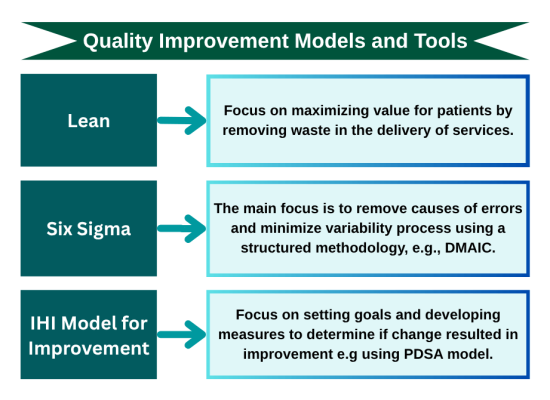
A quality improvement framework or model is a structured approach that is used to systematically improve care. Developing and evaluating a framework for the quality improvement DNP project ensures a higher likelihood of success in achieving an effective and sustained advancement. Some common frameworks and models that DNP students can utilize for their quality improvement projects include the Model for Improvement, Lean, Six Sigma, and Comprehensive Unit-based Safety Program (CUSP). By applying quality improvement frameworks or models, nursing scholars are able to standardize processes to reduce variation and improve outcomes for patients and healthcare systems.
What is the Structure of a DNP Quality Improvement Project?
The requirements for composing DNP projects are distinct across various nursing institutions. When structuring the DNP quality improvement project, the nursing student should follow the formatting instructions provided by their project faculty advisor. The structure of the DNP quality improvement project typically consists of:
- Abstract.
- Introduction that consists of the purpose of the quality improvement project, background, organizational needs assessment, Strengths, Weaknesses, Opportunities, and Threats (SWOT) analysis overview, problem description, and definition of terms.
- Scientific underpinnings that contain a general overview of the clinical problem, literature search strategy, literature review, evidence-based practice question, change recommendation, theoretical framework, nursing theory, synthesis of nursing theory, evidence-based change model, and a summary of key points of the chapter.
- Project design and methodology that encompasses implications of the project outcome, purpose of the study, project planning and procedures, interprofessional collaboration, project management plan, feasibility, setting and sample population, population and sample, data collection techniques, instrumentation, variables, data integrity and storage, data management, potential bias, and ethical considerations.
- Data analysis and results that contain the analysis procedures, descriptive data of the sample population, and results.
- Implications in practice and conclusions section, which contains major findings, interpretation of findings, strengths and limitations, implications, recommendations, plan for dissemination, conclusion, and contribution to nursing practice.
- References.
- Appendices.
What are Examples of Quality Improvement Projects for a DNP?
- Implementing a hypoglycemia/hyperglycemia protocol in a nursing home.
- Introducing the utilization of home enteral nutrition for patients in a pediatric clinical setting.
- Applying home blood pressure monitoring for postpartum mothers with hypertensive disorders.
- Implementing an adverse childhood experiences (ACEs) screening tool in a county health department in San Francisco.
- Standardizing postpartum teaching for nurses to improve the quality of the newly delivered mother and child after discharge.
- Expanding outpatient palliative care referrals for veterans in a primary care setting.
- Implementing an emotional debriefing protocol in the Intensive Care Unit (ICU).
- Introducing a cognitive screening tool for the elderly surgical patients in the preoperative outpatient setting.
- Applying nurse education to enable safe disposal of controlled drugs, substances, and chemicals in a pain management clinic.
Summary
Quality improvement DNP projects are conducted to ensure that patients get safe and effective care while reducing healthcare costs and improving outcomes. Some tips for writing a quality improvement project include ensuring the project aligns with the AACN DNP Essentials, the project solves a clinical problem using an evidence-based approach, and the use of an intervention with multiple elements, among others. Are you a DNP student looking for help with a quality improvement project at an affordable price? Get assistance from our professional DNP capstone project writers to complete your quality improvement project. One unique trait of our DNP capstone project writers is the understanding and adherence to academic guidelines and standards; hence, you have nothing to worry about when placing an order with us. We are available 24/7 to respond to your inquiries promptly. Contact us today or join our live chat for the best quality improvement DNP project writers.