
Types of BSN to DNP Programs.
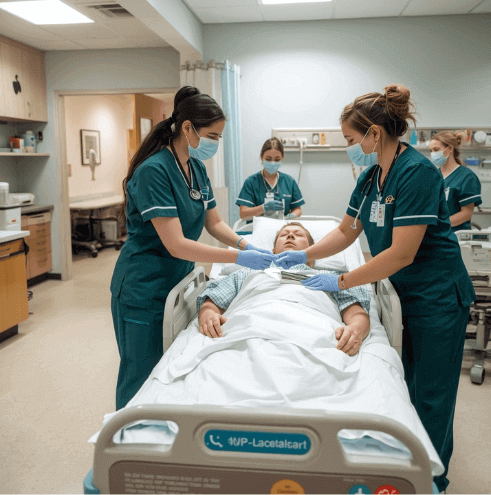
Bachelor of Science in Nursing (BSN) to Doctor of Nursing Practice (DNP) programs are designed to prepare nursing scholars to enter high-level clinical leadership roles, equip them with advanced research skills, and real-world experience necessary for improving patient outcomes. Throughout the BSN to DNP nursing program, students are required to complete online coursework and gain practicum experience to formulate effective healthcare policies and apply evidence-based practices in clinical settings.

At dnpnursingprojecthelp.com, we help DNP scholars write all their nursing tasks successfully and achieve the highest grades. We have writers with over a decade of experience writing nursing dissertations, DNP capstone projects, SOAP notes, nursing care plans, essays, discussion posts, and reflective journals, among others. When transitioning from BSN to DNP, reach out to us for the best doctoral nursing papers writing services. We are available 24/7 to ensure we respond to our clients’ inquiries promptly and update them on the progress of their tasks throughout the process.
You can enroll directly into a DNP program without pursuing the separate Master of Science in Nursing (MSN) degree if you have the appropriate prerequisites, skills, and experience. By enrolling in BSN to DNP programs, graduate nurses are prepared for better and advanced roles, some of which include nurse practitioner, health systems leaders, or nursing informaticists. This article is a guide to everything registered nurses should know about the BSN to DNP programs, including the types, which are certified nurse midwifery, clinical nurse leader, clinical nurse specialist, and certified registered nurse anesthetist, among others.
What is a BSN to DNP Program?
A BSN to DNP program is an educational program that enables registered nurses who hold a BSN degree to obtain a DNP and begin their career as Advanced Practice Registered Nurses (APRNs). BSN to DNP programs are typically designed to provide prerequisite courses to educate nursing scholars on the key takeaways of the MSN degree program, but with less time and commitment. Students seeking to enroll in a BSN to DNP program are usually expected to meet some eligibility requirements some of which include: (a) BSN degree from an approved university, (b) good score on the Graduate Record Examination (GRE) subject test, (c) eligibility for nursing licensure in the school’s state, (d) personal interview, (e) an exceptional personal essay, and a (f) BSN GPA of at least 3.0 on a 4.0 scale. By pursuing a BSN to DNP program, registered nurses can prepare for advanced nursing practice by learning how to:
- Formulate health care policies that promote patient health and contribute to the advancement of nursing as a profession.
- Create and evaluate new nursing practice approaches based on existing nursing theories and concepts.
- Combine advanced knowledge from the health sciences and other disciplines with clinical expertise to support advanced nursing practice.
- Integrate nursing knowledge with technology and information systems to improve patient outcomes and the healthcare delivery system.
Types of BSN to DNP Programs
1. Nurse Practitioner
A nurse practitioner is an APRN who has completed doctoral-level education and training from a nationally accredited program and is qualified to provide primary, acute, and specialty care to patients across various populations. Nurse practitioners contribute to the overall healthcare system by integrating the patient-centered approach of nursing with the advanced medical knowledge and skills usually associated with physicians. Nurse practitioners have various responsibilities in advanced nursing practice, such as: (a) assisting surgeons with providing patient care, (b) noting patient history, (c) admitting, transferring, and discharging hospitalized patients, (d) conducting patient check-ups, and (e) evaluating patient needs.
There are multiple areas of nursing practitioner specialty that registered nurses can pursue, some of which include:
- Acute care nurse practitioner.
- Family nurse practitioner.
- Adult-gerontology nurse practitioner.
- Pediatric nurse practitioner.
- Women’s health nurse practitioner.
- Psychiatric mental health nurse practitioner.
Registered nurses looking to specialize in the nurse practitioner program can earn their DNP degree online or on campus, but clinical hours should be completed in person. The clinical hour requirements are 1000 hours, and some of the eligibility requirements for the nurse practitioner DNP program include transcripts from the school attended, a personal statement, letters of recommendation, and GRE scores. The nurse practitioner program is ideal for nurses who might be interested in healthcare leadership, quality improvement, and evidence-based practice and research.
2. Clinical Nurse Specialist
A clinical nurse specialist is an APRN who improves healthcare outcomes by providing direct patient care, optimizing medical systems, and leading evidence-based practice. Clinical nurse specialists offer patient care in specialty areas such as psychiatric mental health centers, women’s health hospitals, neonatal care settings, adult-gerontology hospitals, and centers for pediatric care. Primary roles of a clinical nurse specialist include, but are not limited to:
(a) Treating diseases unique to their specialty.
(b) Conducting original evidence-based research.
(c) Providing clinical expertise in various medical settings.
(d) Educating and mentoring other nurses.
(e) Acting as a supervisor for other staff.
To pursue a clinical nurse specialist role for the BSN to DNP program, the registered nurse must have completed a BSN from an accredited nursing institution. The BSN to DNP program for a clinical nursing specialist takes 3-4 years and is ideal for nurses who are looking to specialize in a specific patient population and are interested in influencing healthcare systems.
3. Certified Nurse Midwifery
A certified nurse midwife is a primary healthcare provider who specializes in providing medical services related to women’s reproductive health and childbirth. The main responsibilities of a certified nurse-midwife include:
(a) Assisting expectant mothers with childbirth.
(b) Offering prenatal education to pregnant mothers and their families.
(c) Reducing health care costs in obstetric and gynecological care.
(d) Monitor fetal development by taking uterine measurements, listening to the fetus’s heartbeat, and estimating the fetal’s size.
(e) Provide patients with family planning services such as oral contraceptives and cervical barriers.
The certified nurse midwifery program is suitable for nurses who enjoy dealing with women from multiple backgrounds, promoting holistic health, and educating patients. Registered nurses pursuing a BSN to DNP program for certified nurse midwifery should be skilled in neonatal resuscitation, labor and delivery, and providing comprehensive emotional support during events such as stillbirth, miscarriage, or postpartum complications. We help nurses pursuing a midwife course complete their studies with ease by offering writing services for all the class tasks, such as discussion posts, essays, proposals, dissertations, and dissertations, among others. Reach out today to hire expert nursing writers and save your time to concentrate on other tasks, such as clinical practice and family.
4. Certified Registered Nurse Anesthetist
A certified nurse anesthetist is an APRN who gives anesthesia to patients awaiting surgery or other medical procedures. By pursuing a BSN to DNP program for a certified registered nurse anesthetist, the registered nurses can contribute to advanced nursing practice by:
(a) Formulating, implementing, and evaluating an anesthetic patient care plan.
(b) Educating patients on follow-up anesthesia care.
(c) Maintaining patient safety during treatment.
(d) Facilitate effective communication between medical departments.
(e) Conducting pain management techniques.
Depending on the university, the course content for the certified registered nurse anesthetist for the BSN to DNP program varies, but the main concepts include clinical anesthesia, advanced health assessment for nurse anesthesia, and principles of anesthesia, among others.
Ready to Advance Your Nursing Career? Enroll in a BSN to DNP Program Today
In case you are a nursing scholar who would like to make a significant impact in advanced nursing practice by improving patient outcomes and healthcare delivery, then enrolling in the BSN to DNP program is the best option. If your goal is to become a nurse practitioner, certified nurse anesthetist, nurse midwife, or any other APRN, then the BSN to DNP program offers a direct route to the terminal level of nursing education. Most BSN to DNP programs usually require a minimum of a BSN from a credible institution and a nursing license, but the scholar should consult with the academic advisors to determine the exact requirements.
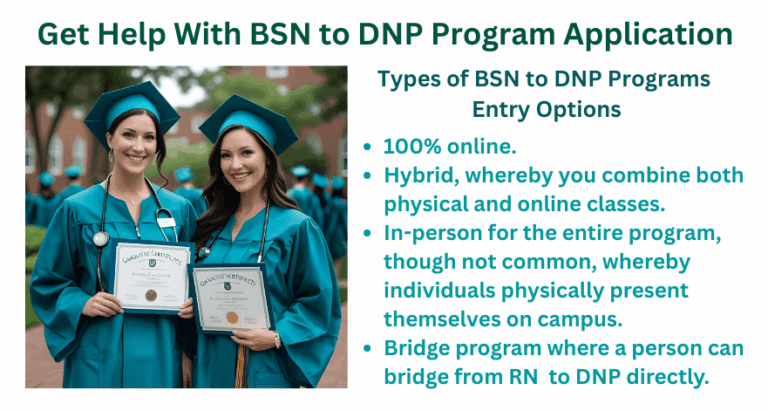
Most institutions offer in-person, online, and hybrid BSN to DNP programs, enabling registered nurses to balance learning and their responsibilities and access high-quality education regardless of their geographical locations. If you aim to influence healthcare policy, contribute to advanced nursing practice, or become a clinical leader, enrolling in a BSN to DNP program is a key step to career advancement.
Our company prides itself on helping scholars write nursing papers that help them achieve high academic grades. We write papers such as dissertations, DNP capstone projects, discussion posts, essays, nursing research papers, and reflective papers, among others.
Summary
BSN to DNP programs are advanced nursing degrees that allow registered nurses with a BSN to pursue and earn a terminal degree without doing the MSN. With multiple areas of nursing research, nurses looking to become advanced practice nurses should select a specialty that may include nurse practitioner, clinical nurse specialist, certified nurse midwifery, and registered nurse anesthesia, among others. By earning a DNP degree, scholars can gain access to advanced nursing practice roles, get clinical leadership positions, develop health policies, and gain specialized career paths.
Don’t hesitate to progress your nursing career! Evaluate different types of BSN to DNP programs, reach out to our professional nursing advisors, and take the first step towards earning your DNP today. You can also chat with our friendly customer service agents to guide you through the BSN to DNP programs application process. Additionally, our experts are well acquainted with the DNP program requirements and have helped thousands of students write outstanding nursing papers, such as DNP capstone projects, systematic reviews, and essays, among others.