
MSN vs DNP: A Comparison
As the nursing profession continues to evolve, advanced nursing degrees, including Master of Science in Nursing (MSN) and Doctor of Nursing Practice (DNP), are crucial pathways for professionals seeking advanced clinical, leadership, and specialization roles. Our experts understand that choosing between MSN and DNP degrees can be complex because they vary in curriculum, career outcomes, and long-term benefits. Additionally, we are well acquainted with the MSN and DNP application requirements, and we assist scholars in writing some of the required documents, such as resumes /CVs, personal statements, and recommendation letters, among others. The specific advantages of each program vary based on the role the nurse wishes to have, the leadership aspirations, and the practice environment. To make an informed decision, one ought to understand how each degree fits into personal and professional plans. This article contains a detailed comparison of MSN and DNP programs, including their definitions, enrollment requirements, coursework, salary expectations, benefits, career opportunities, future perspectives, and trends.
What is the Distinction Between MSN and DNP?
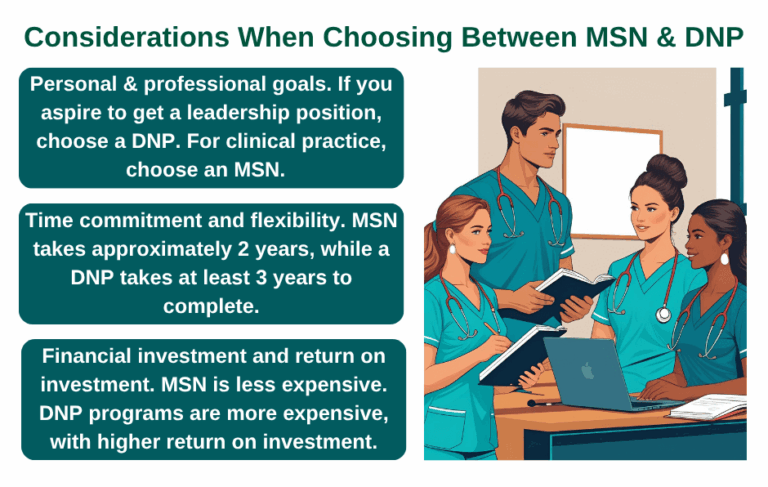
The MSN is a graduate degree focusing on advanced clinical practice and specialty preparation in roles such as nurse practitioner (NP), nurse educator, or clinical nurse leader. The MSN degree is founded on the core nursing knowledge to prepare professionals to practice in direct patient care, teaching, and mid-level leadership positions. The MSN degree is a significant stepping stone for nurses who wish to specialize and increase their clinical scope without pursuing a doctoral program.
The DNP is the highest practice-focused nursing degree that prepares scholars with advanced clinical skills, leadership, and the translation of evidence-based research into practice. In contrast to research-oriented doctoral programs such as the Ph.D., the emphasis of the DNP is to apply clinical knowledge to better healthcare systems and patient outcomes. The DNP program is structured to meet the needs of nurses interested in leading change at the organizational, community, or policy level but want to retain a robust clinical presence.
DNP and MSN Enrollment Requirements
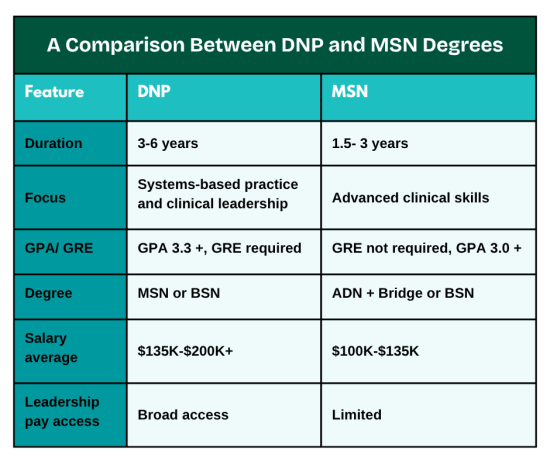
MSN Admission Requirements
- Bachelor of Science in Nursing (BSN) or Associate Degree in Nursing (ADN) with a bridge option.
- A current, unencumbered registered nurse (RN) license.
- Minimum GPA, often 3.0 or higher.
- Recommendation letters, resume/CV, and personal statement.
- GRE scores or prerequisite courses may be required in some schools.
DNP Admission Requirements
- BSN or MSN, based on a BSN-to-DNP or MSN-to-DNP program.
- Active RN license.
- A minimum GPA of 3.3 or above.
- Professional references, academic writing sample, and personal statement.
- Clinical experience.
- Specific programs require GRE scores and an official interview.
- Recommendation letters.
DNP vs MSN Coursework
MSN Coursework
In MSN programs, coursework enhances clinical knowledge and enables students to specialize in one practice area. At DNP Nursing Project help, we understand the course components for each MSN specialty and help scholars write nursing assignments, capstone projects, essays, discussions, and research papers, among others. MSN programs entail classroom education and practical clinical experience to prepare nurses for advanced healthcare roles. MSN programs’ specialty fields include:
- Advanced Pharmacology.
- Advanced Health Assessment.
- Advanced Pathophysiology.
- Nursing Leadership and Ethics.
- Research Methods and Evidence-Based Practice.
- Specialized programs such as Family NP and Nurse Educator.
Programs usually include 500 – 700 clinical hours and focus on direct care provision. These supervised and structured clinical experiences make the student competent in the selected specialty. Students transfer knowledge gained in the classroom to real-life patient care situations, developing confidence and higher clinical judgment.
DNP Coursework
DNP program scholars complete 1,000+ clinical hours, utilizing advanced knowledge in healthcare systems. The focus of DNP programs is on leadership, systems thinking, and clinical innovation. DNP courses include:
- Advocacy and Healthcare Policy.
- Analytical Methods and Clinical Scholarship.
- DNP Scholarly Project (Capstone).
- Epidemiology and Population Health.
- Healthcare Information.
- Organizational Leadership.
For DNP students looking for help with coursework assignments, DNP projects, essays, discussion posts, SOAP notes, data analysis, dissertations, or nursing research papers, among others, get in touch with our expert writers or place an order with us for the best DNP papers writing services.
Salary Expectations for DNP and MSN Graduates
MSN Salary
The most common jobs of MSN graduates include NPs, with an annual average salary of USD 129,210. MSN graduate salaries depend on one’s experience, specialization, and geographical location. In most cases, nurses with MSN degrees can earn significantly more than those with a bachelor’s degree. Approximate salary ranges of typical MSN jobs are as follows:
- NP: $129,210
- Nurse Educator: $86,530
- Clinical Nurse Leader: $89,949
DNP Salary
DNP professionals will earn better salaries due to their expanded knowledge and leadership capacity. This advanced certification qualifies them to work in high-level jobs that command high remuneration in clinical, academic, and administrative settings. The salary ranges between 135,000 and 160,000, with executives and policy leaders earning higher salaries.
- Advanced Practice Nurse (DNP): $132,050.
- Chief Nursing Officer (CNO): $147,192.
- Certified Registered Nurse Anesthetist: $212,650.
Advantages of Both MSN and DNP Degrees
Benefits of an MSN Degree
An MSN program has a shorter completion time than a DNP and enables nurses to integrate into advanced roles faster. Also, MSN is typically less expensive to earn, and therefore, more affordable to many students. MSN graduates can also become NPs after achieving certification and licensure, which can lead to specialty clinical practice opportunities and advancement. The MSN program is also offered in a flexible format and online, which suits the busy schedules of working nurses. Additionally, MSN scholars have an opportunity for advanced clinical specialization, where a nurse can concentrate in family health, pediatrics, or psychiatric care, among others, based on their interests and career objectives.
Benefits of a DNP Degree
The DNP is the highest nursing practice-focused degree, and its competencies and rigor are widely accepted. The DNP program equips graduates with the competencies to assume leadership at the system level and to shape healthcare policy, making them key decision-makers in complex healthcare settings. The degree provides access to well-paid executive positions, including chief nursing officer or healthcare administrator, and can be considered a worthwhile investment in long-term career development. Besides, the DNP responds to the growing need for doctoral-prepared educators, which can fill gaps in nursing faculty shortages and help shape future nursing professionals. It is important to note that the DNP program aligns with the emerging trends that support the idea of doctoral-level education as the minimum entry requirement to advanced practice roles to ensure that graduates are well prepared to meet the challenges of the changing healthcare landscape.
Career Opportunities for MSN and DNP Graduates
MSN Career Paths
Graduates of MSN programs are typically employed in clinics, schools, hospitals, and non-profit organizations, providing direct care and assisting with health education. MSN graduates are prepared to assume advanced roles combining clinical skills with leadership and educational duties. MSN-prepared nurses often follow the following career paths:
- Nurse Educator
- Clinical Nurse Leader (CNL)
- NP
- Public Health Nurse
- Nurse Administrator
DNP Career Paths
Graduates of DNP transition to decision-making roles, where they shape health policy, innovation, and quality improvement in health systems. DNP program graduates’ high-level training prepares them to spearhead change, address complex healthcare issues, and promote evidence-based practice in the organization and nationally. DNP-prepared professionals work in the roles below:
- Advanced Practice Registered Nurse (APRN)
- University-Based Nursing Faculty
- Chief Nursing Officer (CNO)
- Clinical Operations Director
- Health Policy Leader / Consultant
Future Nursing Perspectives and Trends
The DNP is becoming more prominent as the push towards evidence-based healthcare gains momentum. The American Association of Colleges of Nursing (AACN) endorsed the DNP as the new standard of advanced practice nursing, indicating a change in professional expectations. Although MSN programs are still valuable, most institutions are shifting toward BSN-to-DNP models, and the traditional MSN program is being phased out in favor of educating nurse leaders who will be prepared to address the healthcare needs of the 21st century.
Summary
When choosing between DNP and MSN programs, our team of experts advises applicants to conduct a careful analysis of career objectives, schedules, and personal ambitions. We also help clients apply for the two degrees by writing some of the required documents such as personal essays. Although the MSN allows a faster and less expensive way into advanced practice positions, the DNP offers more comprehensive leadership training, increased earning power, and influence over healthcare systems. Awareness of the differences in definitions, admission requirements, coursework, pay, benefits, and career prospects helps future nurses make informed choices. Are you ready to move on in your nursing career? Contact our team today to learn more about the best-fit program that will align with your objectives and open new opportunities in advanced practice and healthcare leadership. You can also talk to our friendly customer support agents via our live chat for any inquiries or click here to go through our order process.