
Salaries for Various Nursing Roles in the US

Nurses are key contributors to making meaningful progress toward healthcare equity in the United States (US) by playing a major role in the provision of care and optimizing health system productivity and patient outcomes. However, nurses have different types of requirements and make distinct amounts of income depending on their education level, size of the medical institution, state they work in, and years of experience.
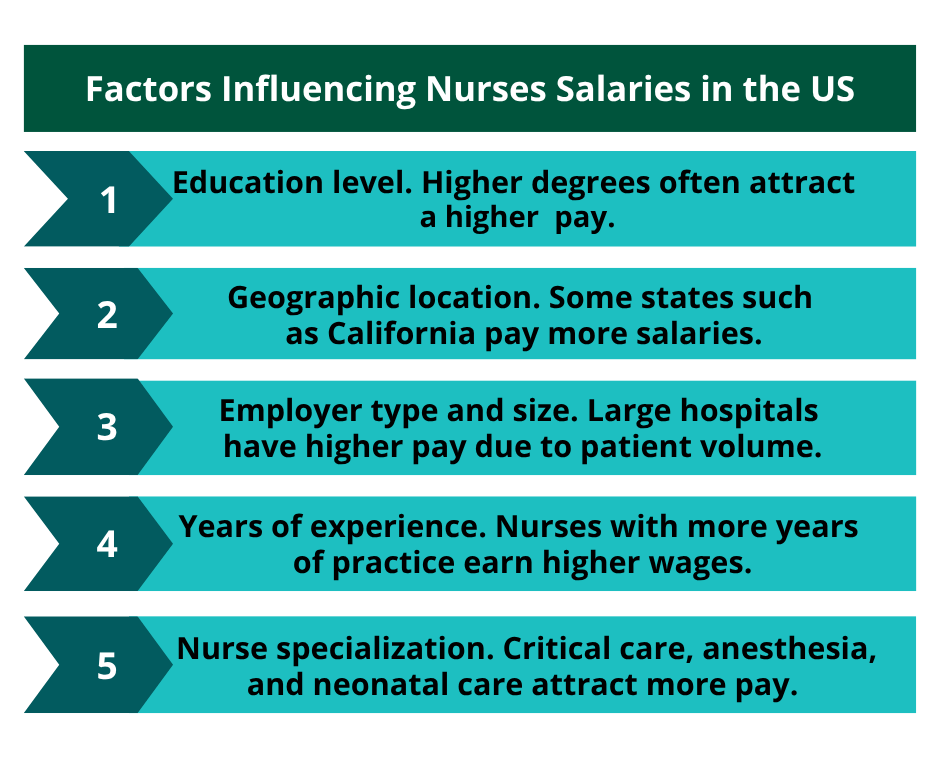
Are you interested in becoming a nurse in the US or already a nurse but looking to boost your earning potential? If so, then you may be interested in understanding how nursing salaries vary and what influences the differences across the healthcare profession through our guide.
At DNP Nursing project help, we have professional nursing writers and consultants who help scholars choose the best program to take and assist with coursework. We help scholars write papers such as capstone projects, essays, data analysis, and SOAP notes, among others. In this article, we have discussed some nursing roles, their responsibilities, and their average salaries as of 2025, some of which include Certified Registered Nurse Anesthetist (CRNA), foreign, registered, flight, and registered nurses.
How Much Do Nurses Make?
In the US, nurses are in high demand due to several factors, such as the aging population, a large retirement wave of the existing nursing workforce, an increase in chronic health issues among US citizens, and medical advances. Because nurses are highly sought after, US hospitals must provide competitive salaries, with the average nursing salary standing at approximately $93,600 per year with an hourly rate of $45, according to the US Bureau of Labor Statistics. Comprehending the median nurse salary is important for current and future nurses to understand their potential earnings, plan finances, and make strong career decisions. However, the US national salary is based on real data, and individual nurse salaries differ based on the role, geographical location, training, healthcare facility, demand and supply, and educational level. DNP scholars tend to earn more than MSN and BSN scholars. The requirements for enrolling in the various nursing programs are well stated here.
Different Types of Nurses and Their Salaries as of 2025
1. Travel Nurse Salary
A travel nurse is a registered nurse or advanced practice nurse who works in hospitals and other healthcare facilities on a contract basis in multiple locations. Travel nurses are usually hired to fill in medical shifts during periods of short staffing. A travel nurse’s salary differs based on factors such as location, demand, and nursing specialty, but the national average rate is $2,130 per week, with the hourly rate being $49.
When travel nurses sign the contract to work with a nursing agency, their compensation package determines their salary, including details such as hourly pay, travel reimbursement, and housing stipends, among others. Travel nurses facilitate patient care across various settings, including but not limited to schools, physicians’ offices, home healthcare, ambulatory care centers, government agencies, correctional, residential care, and skilled nursing facilities. To become a travel nurse, get a nursing degree from an accredited nursing school, become licensed through passing exams such as the National Council Licensure Examination (NCLEX), gain relevant experience in a specialty, get certifications, and join a travel nurse agency.
2. Flight Nurse Salary
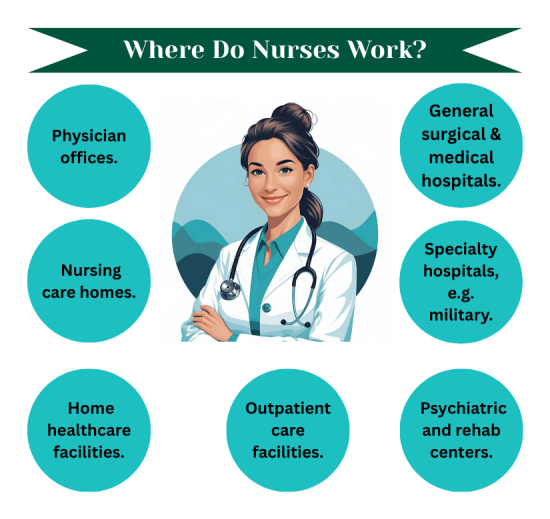
A flight nurse is a registered nurse who specializes in providing emergency critical care to patients during aeromedical evacuation while en route to a medical institution. A flight nurse’s salary varies depending on several factors, such as years of experience, geographical location, education level, and workplace, but the average annual salary is $93,600. Flight nurses mainly work in areas like hospitals and trauma centers, private medical transport companies, burn centers, search and rescue agencies, the military, and burn military to stabilize patients and ensure safe transportation.
Flight nurses must become registered nurses by completing their Bachelor of Nursing (BSN) or Associate Degree in Nursing (ADN) and obtaining their registered nurse license by passing the NCLEX, which is usually administered by the National Council of State Boards of Nursing (NCSBN). Flight nurses should also have relevant experience in settings such as trauma centers, acute care units, or the ICU. Flight nurses usually encounter high-risk obstetrical patients, so individuals interested in becoming flight nurses should demonstrate the ability to adapt in critical situations.
3. CRNA Salary
A certified registered nurse anesthetist (CRNA) is an advanced practice registered nurse (APRN) who administers and cares for patients receiving anesthesia. According to the U.S. Bureau of Labor Statistics, a nurse anesthetist’s salary is around $132,050 per year with an hourly rate of $63.48 per hour. The overall employment for nurse anesthetists and other medical professionals is projected to grow by 40% from 2023 to 2033 at a much faster rate than the average of all jobs. CRNAs usually work in various medical settings, some of which include Intensive Care Units (ICUs), dental offices, maternity hospitals, operating rooms, and emergency rooms. To become a nurse anesthetist, a person should: (a) have a bachelor’s degree in a nursing field, (b) be a licensed registered nurse in the US, (c) have at least one year experience working as a nurse, (d) attend and graduate from an accredited nursing anesthesia program, and (e) pass the national certificate examination for nurse anesthetists after graduation. One can also take a BSN-DNP program to become a certified registered nurse anesthetist (CRNA).
4. Nurse Practitioner Salary
A nurse practitioner is an APRN who has additional education and training beyond that of a registered nurse and diagnoses, manages, and prescribes medication and treatment for patients. A nurse practitioner’s salary depends on factors such as the healthcare institution the nurse is working for, years of experience, location, and specialty, but the average annual salary is $ 132,050. Nurse practitioners provide high-quality care in various settings such as nurse practitioner-led clinics, patients’ homes, physicians’ offices, health care centers, community clinics, nursing homes, and outpatient clinics. The pathway to becoming a nurse practitioner involves obtaining a BSN in nursing, passing the NCLEX exam and getting a registered nurse license, enrolling in a graduate program, taking the national NP certification board exam, and getting nurse practitioner licensure.
5. Nurse Midwife Salary
A nurse-midwife is a registered nurse who provides critical care for expectant mothers and newborn infants from pre-pregnancy, during pregnancy, birth, postpartum, and the early weeks of life. According to the U.S. Bureau of Labor Statistics, the average annual wage for nurse midwives was $132,050 as of May 2024. However, the nurse midwife salary is determined by several key factors such as the years of experience, level of education, location, type of healthcare setting, and demand.
Reach out to our experts today for help with the nursing courses application and guidance. We also help nursing students write their tasks, such as dissertations, capstone projects, data analysis, nursing care plan, SOAP notes, essays, and discussion posts, among others. Our professional nursing writers and consultants have over a decade of experience; hence, you are assured of high-quality work from us. We are available 24/7 to respond to our clients’ inquiries promptly. You can contact us or reach out via our live chat to talk to our sociable customer service agents.
FAQs About Salaries for Various Nursing Roles in the US
1. How Much Do BSN Nurses Make?
A BSN takes 3-4 years to complete and is the typical standard for most entry-level jobs in the nursing profession. The salary a BSN nurse makes depends on their specialty, with some of the highest paying roles for nurses with a BSN including (a) pharmaceutical RN, (b) nurse informaticists, (c) nurse educators, and (d) RN case managers. Nurses with a BSN usually earn an average salary of $40.98 per hour with an annual salary of approximately $93,600.
2. What Kind of Nurses Get Paid the Most in the US?
With the increasing demand for patient care in the US, most advanced nursing practice roles offer six-figure salaries annually and various opportunities for clinical leadership. CRNAs are the highest paid nursing specialties in the US with an annual salary of $223,210 because they participate in preparing and administering anesthesia to patients using a multidisciplinary approach with surgeons, dentists, podiatrists, anesthesiologists, and other medical professionals. The other remaining highest-paid nursing roles include:
- General nurse practitioners have an annual average salary of $129,210.
- Certified nurse midwives receive a yearly average salary of $128,790.
- Neonatal intensive care nurses earn an average of $128,211 per year.
- Pain management nurses earn an average of $125,412 per annum
- A psychiatric nurse practitioner gets an annual income of $ 122,097.
- Nursing administrator earning $117,960 per year.
- A health policy nurse receives $117,469 yearly.
- Registered nurse first assistant who earns $116,000 annually.
- A gerontological nurse practitioner who gets $107,990.
- Family nurse practitioner getting $105,289.
- Clinical nurse specialist receiving $94,545.
- Nurse educator who earns $86,530.
- An informatics nurse who gets $85,326.
- Intensive care unit nurse receiving $85,205.
3. Which are the Highest Paying States for Nurses in the USA?
Nurse salaries vary across states in the US mainly due to factors such as the demand for nurses, state-specific regulations, and the cost of living. The highest paying state is California, with an average registered nurse annual salary of $140,330 and $67.47 hourly. Other high-income states include Hawaii, Oregon, Washington, Alaska, New York, the District of Columbia, New Jersey, Nevada, and Massachusetts.
4. What is the Salary of a DNP in the US?
A DNP is a terminal degree in nursing that equips nurses with extensive knowledge to influence healthcare outcomes through developing health policies, organizational leadership, and direct patient care. After earning a DNP, nurses are able to work various jobs such as nurse practitioners, CRNAs, nurse educators, and certified nurse midwives. According to ZipRecruiter, the average annual salary of a DNP in the US is $117,859 and $56.66 an hour in 2025.